
E-invoicing France 2026-2027
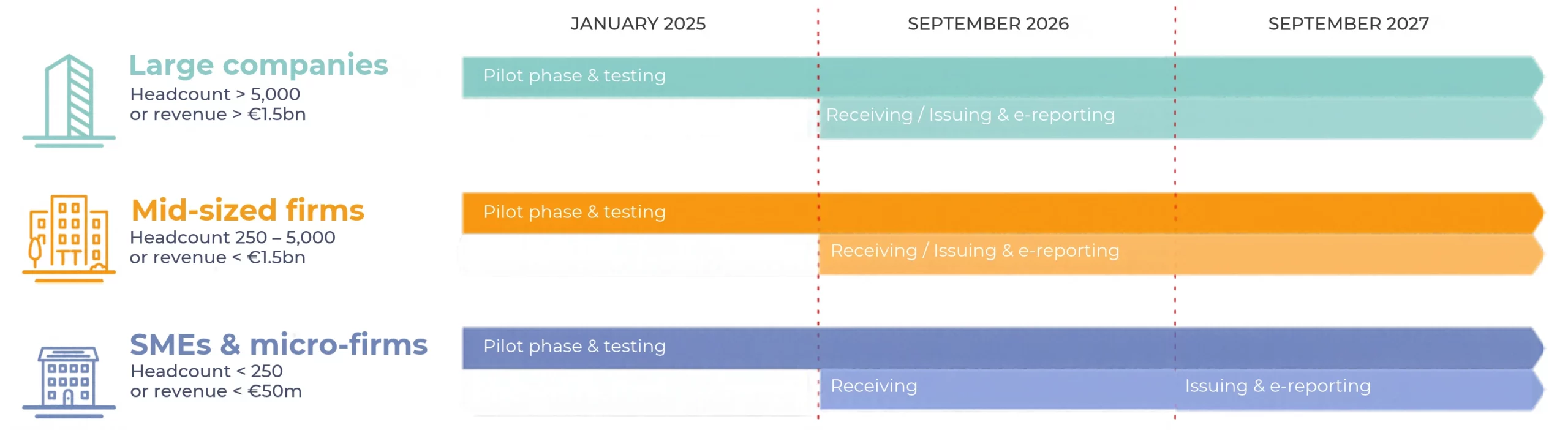
Mandatory e-invoicing is now a reality for the French private sector! Article 153 of the 2020 French Finance Act introduced the obligation to issue electronic invoices (e-invoicing) and to transmit transaction and VAT data (e-reporting) for B2B transactions between VAT-registered companies established in France. The mandate applies to all VAT-registered companies, whatever their size. Since September 1, 2026, every company must be able to receive e-invoices and large and mid-sized companies must issue them; SMEs and micro-enterprises must issue e-invoices from September 1, 2027.
Discover what is at stake with e-invoicing in France and how to plan a successful roll-out so you are ready on time!
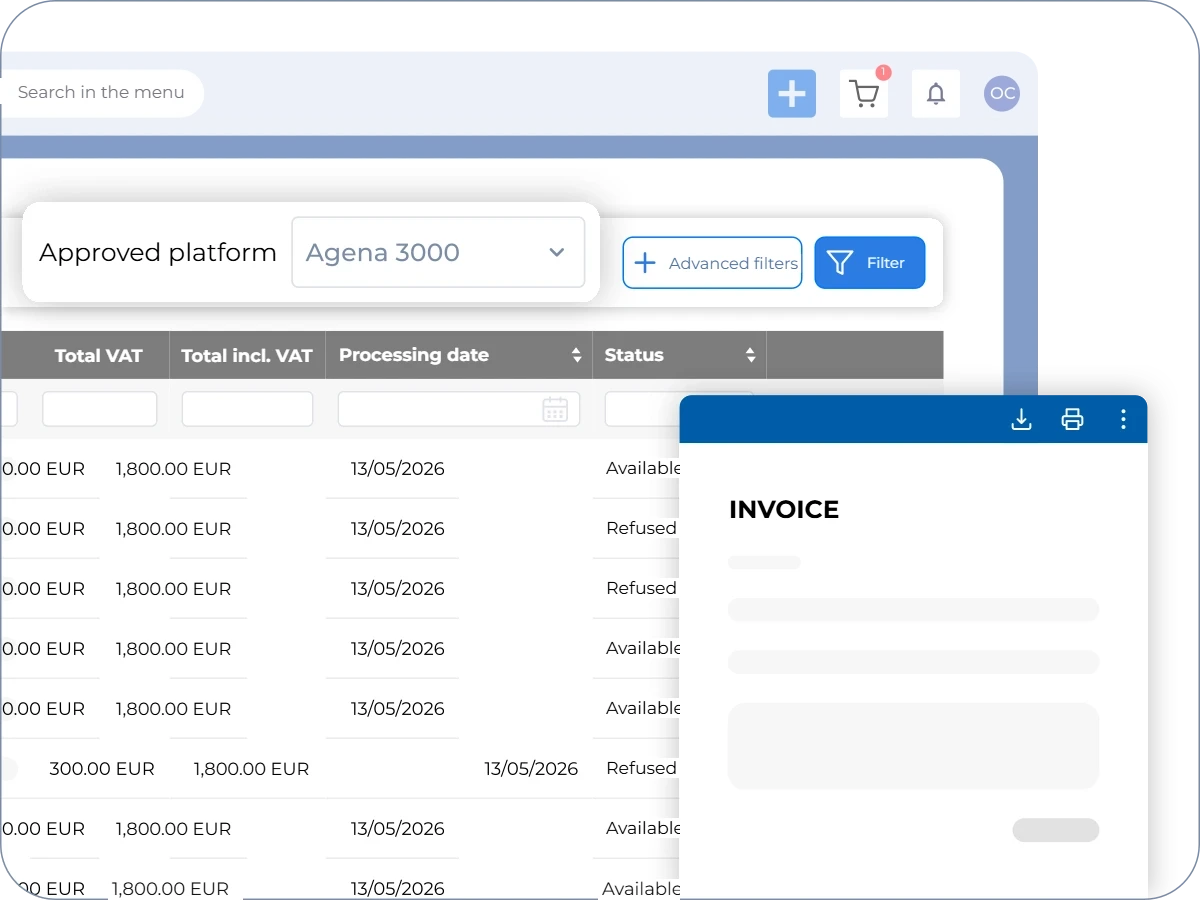
Oxalys has partnered with AGENA3000, registered by the French State as a certified e-invoicing platform (Plateforme Agréée, PA).


Switching to e-invoicing in France:
immediate challenges, long-term benefits
For the tax authorities: direct economic gains
The French tax authority (DGFiP) has set 4 main objectives for mandatory e-invoicing:
- Fight VAT fraud
- Monitor business activity in real time
- Reduce administrative processing costs and payment delays
- Simplify VAT returns with pre-filled declarations
For companies: greater competitiveness through digital practices
The 2020 French Finance Act makes e-invoicing mandatory for B2B transactions between VAT-registered companies established in France.
The stakes are high for both the State and companies, and preparing well is the key to reaping the long-term benefits:
- Higher productivity in administrative management
- Lower invoice processing costs
- Better tracking of payment deadlines
- Stronger customer-supplier relationships
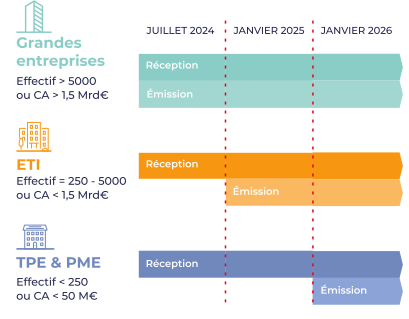
The deadlines: when do you need to be ready?
E-invoicing and e-reporting: what are they?
E-invoicing is the creation and exchange of invoices in a structured electronic format between VAT-registered companies.
E-reporting is the transmission to the tax authorities of the data needed to pre-fill VAT returns (B2C, international transactions and payment data).
How e-invoicing in France works
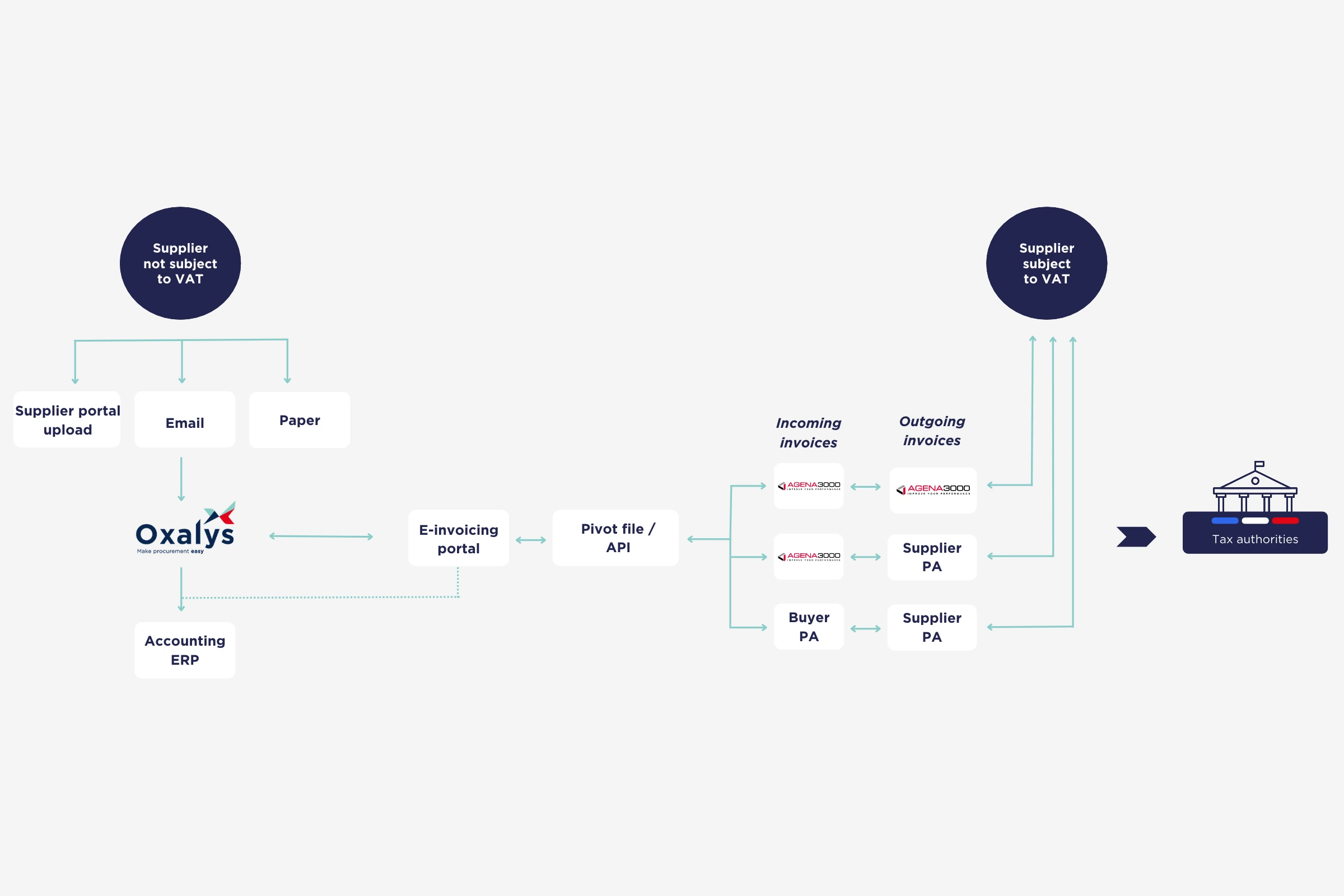
The model chosen by the DGFiP requires companies to exchange their e-invoices through the certified platform (Plateforme Agréée, PA, formerly PDP) of their choice, while continuing to work with their current providers through compatible solutions (OD). The Public Invoicing Portal (PPF) acts as the central directory and data concentrator for the tax authorities. Whichever platform you choose, Oxalys can receive your electronic invoices.
Oxalys has developed an e-invoicing portal and works with at least one preferred certified platform (PA) partner to provide a complete, high-performance answer to the French e-invoicing mandate.
Our customers benefit from expertise in regulated invoice flows and their processing, with solutions connected out of the box.
A SaaS component designed for customers of the invoice management module.
The customer first selects Oxalys and its certified platform (PA) partner to retrieve the invoices.
Key features
The certified platform (PA, formerly PDP)
- Retrieves supplier invoices
- Extracts the invoice data and makes it available to Oxalys
Oxalys
- Retrieves invoice rejection information (full, partial, etc.) and sends the corresponding status to the PA
- Sends invoices to the Oxalys invoice management module for matching, control and archiving
- Dashboard to monitor electronic invoice flows
From paperless invoices to e-invoicing: why choose Oxalys?
A leading player in Procure-to-Pay digitalisation for SMEs and mid-sized companies, Oxalys already digitises supplier invoices for more than 100 companies that have the features they need to switch to e-invoicing and comply with the French e-invoicing mandate.
Fully digital processes for commitments, supplier invoice processing and tax compliance
Commitment management
Purchasing process from requisition to digital invoices:
- Supplier catalogues (internal or punch-out)
- Budget tracking
- Order management
- Goods receipt
Visibility, traceability and compliance
Documented processes shared by all stakeholders:
- Commitment accounting
- Invoice-to-order matching
- Accrued invoices
- Payment orders and due dates
E-invoicing built into Oxalys
Oxalys features, combined with automation and AI, to boost operational performance:
Receipt of invoices in at least the formats required by the French tax authorities:
- Factur-X (hybrid format combining a structured XML data file and a PDF)
- Universal Business Language (UBL)
- Cross Industry Invoice (CII)
- + other formats through the partner PA
Invoice data extraction:
- Mandatory and optional data
- Consistency checks
- Duplicate management
- Matching with internal master data
Invoice data extraction:
- Automatic initialisation
- Discrepancy and dispute management
Automated processing of non-PO invoices
- Automatic initialisation of invoice lines
- Automatic generation of accounting and cost allocations
Configurable approval workflow engine
- Payment approval and transfer to accounting
- Alert management
Data analysis and alerts
- Data centralised in the data warehouse: dynamic reporting and decision-making analysis
- Operational dashboards and alerts
With its solutions and expertise, Oxalys is the preferred partner of SMEs and mid-sized companies for B2B e-invoicing compliance and VAT e-reporting in France
Our resources for a successful transition to e-invoicing in France
Frequently asked questions
What is an electronic invoice?
An electronic invoice is not simply a PDF sent by email: it is an invoice issued, transmitted and received in a structured format (Factur-X, UBL or CII) through a certified platform (PA), so its data can be read and processed automatically and shared with the French tax authorities.
What do I need to do to be ready for the first deadline of September 1, 2026 (obligation to receive e-invoices)?
Choose a certified platform (PA), check that your Procure-to-Pay or accounting software can receive the structured formats, clean up your supplier master data (SIREN numbers, addresses) and map your invoice processes. Oxalys and its PA partner AGENA3000 cover the reception, extraction and processing of your e-invoices.
Do I need to maintain or set up a reliable audit trail?
Yes. The reliable audit trail remains one of the ways to ensure the authenticity and integrity of invoices. With Oxalys, every step is documented: order, goods receipt, invoice matching, approval and payment, giving you a complete and traceable purchasing history.
Do I have to connect to the PPF (French public invoicing portal)?
Companies do not connect directly to the PPF to exchange invoices: they must go through a certified platform (PA) of their choice. The PPF acts as the central directory and data concentrator for the tax authorities. The cost therefore depends on the PA chosen and on invoice volumes.
How much does it cost to process an electronic invoice?
Processing a paper invoice manually can cost several euros once entry, checks and filing are included. With structured e-invoices and automated matching, processing costs and lead times fall significantly, as data is captured once and checked automatically.
How can I prepare for the switch to e-invoicing today?
Start by digitising your Purchase-to-Pay process: purchase orders, goods receipts and invoice matching. Companies whose invoices are already digital and linked to orders are the best prepared. Oxalys helps you structure these processes and connect your certified platform.
E-invoicing 2026 – Procurement systems: how to prepare?
To anticipate and prepare your transition to e-invoicing

